The Great British Insulation Scheme
The Great British Insulation Scheme is available in Cardiff and all CF postcodes.
So, what does the Great British Insulation Scheme in Cardiff look like?
The Great British Insulation Scheme is a single insulation measure grant.
However, starting in July 2025, free loft insulation will become a secondary measure. This means that you could have both Cavity Wall and Loft insulation together.
The following measures are available, but you can only have 1 measure installed under this grant scheme. There are some exceptions where Heating Controls can be added as a second measure.
Cavity Wall Insulation – This will always be free
Loft Insulation – From July 2025, free loft insulation will be allowed with free cavity wall insulation.
The Great British Insulation Scheme is scheduled to end at the end of March 2026. Therefore, we are now only offering Cavity Wall Insulation by itself, or Loft insulation with Cavity Wall Insulation. We will review the situation in April 2026.
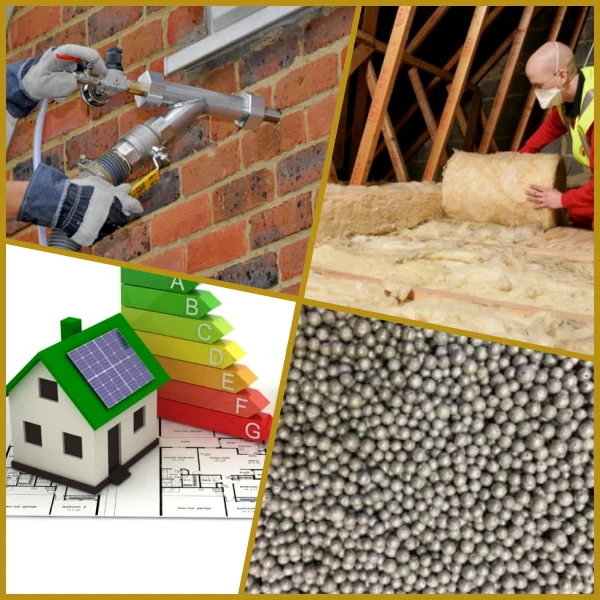
How do I qualify for a Great British Insulation Scheme grant in Cardiff?
There are 2 routes to qualifying for a Great British Insulation grant.
- The General Group.
- The “Low Income” Group.
The General Group qualification for the Great British Insulation Scheme grant in Cardiff.
- Your Council Tax Banding must be an A, B, C, D and E (or in England A to D). You can find your Council Tax Banding on Gov.Uk, and
- Your EPC (Energy Performance Certificate) rating must be a D, E, F or G. You can find your EPC on the EPC Register.
2 yeses, and you qualify.
This route to qualification is only available to homeowners.
The “Low Income” Group qualification to a Great British Insulation Scheme grant in Cardiff.
- You must receive a qualifying benefit (see list below)
- Your EPC (Energy Performance Certificate) rating is a D, E, F or G. You can find your EPC on the EPC Register.
This route to qualification is available to both homeowners and privately rented tenants.
These are the qualifying benefits
- Pension Credit
- Income-Based Job Seekers’ Allowance
- Universal Credit – No income threshold
- Income-Related Employment and Support Allowance
- Tax Credits (including Working and Child Tax Credits) – No income threshold
- Income Support
- Housing Benefit – NEW
- Child Benefit/Family Allowance. Income Thresholds apply – see table below.
| Number of children | 1 | 2 | 3 | 4 |
| 1 adult household | £19,900 | £24,800 | £29,600 | £34,500 |
| 2 adult household | £27,500 | £32,300 | £37,200 | £42,000 |
How do I apply for a Great British Insulation Scheme grant in a Cardiff postcode?
You can call us on one of the telephone numbers below and speak to an expert advisor
0800 8 10 10 60 or 07960 799681
What happens next?
Give us a call to discuss your enquiry or complete the online enquiry form.
Once we have assessed that you qualify for a Great British Insulation Scheme grant and that your property appears to qualify, we will arrange a visit to your property and carry out a set of surveys, including a Cavity Assessment Survey.
#TheGreatBritishInsulationSchemeCardiff #ECO4Cardiff
Free Cavity Wall Insulation FAQs
What material do you use to insulate a cavity wall in Cardiff?
We always install “SuperBead” Polystyrene Beads and not “RockWool” (fibre). Polystyrene Bead is a superior material for insulating Cavity Walls, but it is more expensive.
“SuperBead”, used for Free cavity wall insulation in Cardiff, has been certified by the British Board of Agrément for the following.
Thermal properties — “SuperBead” cavity wall insulation has a declared thermal conductivity of 0.035.
Water resistance — “SuperBead” cavity wall insulation will resist the transfer of water across the cavity.
Condensation — “SuperBead” cavity wall insulation will contribute to limiting the risk of condensation within the home.
Behaviour in relation to fire — “SuperBead” cavity wall insulation does not prejudice the fire resistance properties of the wall.
Durability — “SuperBead” cavity wall insulation is durable, rot-proof and water-resistant. It is sufficiently stable to remain effective as an insulation for the life of the building.
“SuperBead” cavity wall insulation is up to 20% more efficient than fibre insulation, such as Rockwool. This Free Cavity Wall Insulation reduces heat loss through the walls by about 70%. An uninsulated house will lose about 35% of its heat through the walls. Therefore, insulating the walls will save about 25% of your heating bills.
There are about 30% fewer holes than when using fibre, and the holes are smaller.
The beads have been thoroughly tested and will not deteriorate over time. They are fully fire-resistant. They have approval for use in even the most extreme of conditions.
Telephone: 0800 8 10 10 60 or 07960 799681 and speak to an expert ECO adviser
How do you insulate a cavity wall in Cardiff?

Cavity walls can be insulated by blowing the insulation material into the cavity, normally from the outside (it can also be done from the inside if needed and agreed to).
Holes (about 22mm, which is smaller than a 2p coin) are drilled in the outside walls in a set pattern. This pattern is specified in the British Board of Agrément (BBA) certificate for the material being used.
The insulation, together with an adhesive, is then blown through the holes using special equipment. The adhesive “goes off” after about 20 minutes, thus holding the polystyrene beads together in a loose block.
The holes are then sealed with cement which has been coloured to best match the colour of the existing mortar or render.
Filling cavity walls is not a “do-it-yourself” job. A 3-bed semi-detached house will take between 2 and 3 hours to complete.
Our trusted Installers are amongst the best in the business, insulating cavity walls for the past 50 years. They will fill the holes with closely matching cement. You will have a first-class finish with minimal fuss and disruption.
Most of our customers are amazed at how quickly and neatly the job can be carried out. Our work is guaranteed for 25 years by CIGA.
CIGA are the Government-backed Cavity Insulation Guarantee Authority, which gives you complete peace of mind.
Telephone: 0800 8 10 10 60 or 07960 799681 and speak to an expert ECO adviser
Is cavity wall insulation covered by any guarantees?

Yes, cavity wall insulation comes with a 25-year guarantee issued by the Cavity Insulation Guarantee Agency (CIGA).
CIGA provides independent 25-year guarantees for free cavity wall insulation in Cardiff, installed by registered UK and Channel Islands installers.
However, a guarantee is only issued if the property passes a CAS survey, and a grant will not be provided unless this guarantee is in place.
The Government considers cavity wall insulation to be “the most cost-effective energy-saving measure most people can carry out on their homes” and a significant contributor to reducing carbon emissions.
CIGA was established in consultation with the Government’s Energy, Environment and Waste Directorate (DETR) to give householders a reliable, independent guarantee covering defects in both materials and workmanship.
Independent research for the DETR confirms that cavity wall insulation is a very reliable process.
Problems are extremely rare, but if they do occur, CIGA has the expertise to quickly resolve them. The CAS survey further reduces the risk of future issues by only insulating walls that are suitable.
Additionally, CIGA runs the Cavity Wall Insulation Self Certification scheme (CWISC) in partnership with the British Board of Agrément, giving homeowners confidence that work done by registered contractors meets all official requirements.
Telephone: 0800 8 10 10 60 or 07960 799681 and speak to an expert ECO adviser
What is an EPC?
EPC stands for Energy Performance Certificate.
A property needs an EPC if it is being sold or rented.
EPCs were introduced on 1st August 2007, so properties bought before that date will not have one.
EPCs are valid for 10 years. This means you could sell a property with a 7-year-old EPC, but it may not accurately reflect the property’s current energy efficiency. There are proposals to reduce the validity period to 5 years.
The EPC rating measures the cost of heating and hot water for a property, assuming 2.5 occupants, and assigns a grade from A to G:
A = most energy efficient
G = least energy efficient
Changes to the EPC input data were expanded in the spring 2025, which should make the ratings more accurate.
Even if your property does not have an EPC, you can still apply for a Cavity Wall Insulation grant.
Telephone: 0800 8 10 10 60 or 07960 799681 and speak to an expert ECO adviser
Where does the funding for insulation grants come from?
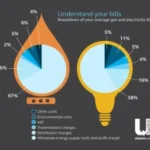
The Government has set legal targets to reduce carbon emissions, and to achieve them, they placed a legal obligation on gas and electricity companies.
This scheme is called the Energy Company Obligation (ECO).
A portion of the cost is included in our fuel bills as the “green levy”:
6% of gas bills
11% of electricity bills
So ultimately, we all contribute to the fund through our energy bills.
Nothing new there then!
Telephone: 0800 8 10 10 60 or 07960 799681 and speak to an expert ECO adviser
Is it possible for cavity wall insulation to cause damp?
According to the Cavity Insulation Guarantee Agency (CIGA), damp problems occur in only 3 out of every 1,000 houses with cavity wall insulation (CWI).
Most historical issues were caused by inappropriate insulation being installed in unsuitable walls.
Previously, Rockwool was the main insulation material used in Cardiff. It has now been replaced by polystyrene beads, which are far more effective.
Early polystyrene beads, small, soft, white beads like those in bean bags, sometimes caused issues because they were not waterproof. Today, larger grey or silver beads are shaped like half coffee beans or a mix of sizes and treated with a water repellent, are used.
A major cause of past problems was door-to-door sales offering “free” insulation without a pre-installation survey, leading to unsuitable homes being insulated.
Quality Control Improvements.
In April 2017, the British Board of Agrément (BBA) took charge of ensuring unsuitable homes were not insulated, leading to the Cavity Assessment Surveillance Scheme (CASS). The BBA certifies that building materials are fit for purpose and provides guidelines for their proper use.
In October 2018, CIGA assumed control of the scheme, which is now monitored by the Insulation Assurance Authority (IAA).
The CAS survey involves a full inspection of the property, taking about 2 hours, including:
• Camera inspections of the cavity
• Age and construction type of the property
• Cavity depth and wall condition
• Damp proof course status
• Condition of gutters and downpipes
• Presence of rubble in cavities
Leaky gutters and downpipes remain a leading cause of damp.
All survey data is uploaded to the IAA platform for auditing. Every survey undergoes a desktop audit, and 1 in 10 surveys are followed by an on-site inspection.
“This level of quality control is designed to prevent insulating unsuitable properties, thereby reducing the risk of damp caused by CWI.”
Before 2017, CIGA noted that 3 in every 1,000 properties could experience problems with CWI. The CAS survey is expected to significantly lower this figure.
Telephone: 0800 8 10 10 60 or 07960 799681 and speak to an expert ECO adviser
How can I tell if my house is suitable for cavity wall insulation?
The simple answer to whether your home is suitable for cavity wall insulation is: “I couldn’t tell you without a survey.”
However, some general guidance:
Homes built after 1925 usually have cavity walls—two layers of brick with a gap (cavity) between them held together with wall ties.
Free Cavity Wall Insulation in Cardiff fills this gap, keeping your home warmer, saving energy, and potentially reducing or eliminating condensation on external walls.
Your home is usually suitable for free cavity wall insulation if:
• The external walls are unfilled cavity walls
• The cavity is at least 50mm (2 inches) wide
• The masonry or brickwork is in reasonably good condition
Why a Survey is Needed?
Suitability isn’t just about age or cavity width. A Cavity Assessment Survey (CAS) is carried out as part of the initial inspection. This survey is administered and audited by the Installation Assurance Authority (IAA).
The survey involves:
• Drilling a small test hole in each wall elevation
• Inserting a borescope to examine the cavity
• Taking photographs and measurements of cavity depth, etc.
• Checking all walls for cracks, unfilled holes, or other remedial work, which must be fixed before insulation
• Inspecting gutters and downpipes for leaks, blockages, and proper drainage
The survey takes about 2 hours and is free of charge.
All results—including photos and measurements—are uploaded to the IAA platform for auditing.
This thorough inspection is part of the enhanced quality control measures introduced with the new free Cavity Wall Insulation Grant scheme in Cardiff.
Telephone: 0800 8 10 10 60 or 07960 799681 and speak to an expert ECO adviser
My house doesn’t have an EPC. Can I still get a grant?
You don’t need an EPC (Energy Performance Certificate) to apply for a Cavity Wall Insulation grant through The Great British Insulation Scheme.
As part of the required survey, we produce an Energy Performance Report (EPR). This report uses the same dataset as an EPC, but it is not registered and does not provide a certificate.
An Existing EPC would have given us an indication of the energy rating of your property. Only properties with C, D, E or F banding would qualify for the grant.
So even without an EPC, your property can still qualify for a grant.
Telephone: 0800 8 10 10 60 or 07960 799681 and speak to an expert ECO adviser
How can I arrange a free, no-obligation survey?
Telephone: 0800 8 10 10 60 or 07960 799681 and speak to an expert ECO adviser to book a free, no-obligation survey.
Does cavity wall insulation make a home cheaper to heat?

Yes, free cavity wall insulation in Cardiff can help reduce your fuel bills, lower your carbon footprint, and may also help reduce or eliminate condensation.
Here’s how heat is typically lost in a home:
• Walls: 35%
• Roof: 25%
• Floor: 15%
• Draughts: 15%
• Windows: 10%
Uninsulated walls account for 35% of total heat loss.
Cavity wall insulation can reduce heat loss from walls by around 70%, which could lead to approximately a 25% reduction in heating costs.
Telephone: 0800 8 10 10 60 or 07960 799681 and speak to an expert ECO adviser to book a free, no-obligation survey.
Do tenants have access to this insulation grant?
If you are a Private Tenant, you must be receiving one of the following benefits to qualify:
Qualifying Benefits:
• Pension Credit
• Income-based Jobseeker’s Allowance
• Universal Credit (no income threshold)
• Income-related Employment and Support Allowance
• Tax Credits (Working Tax Credit or Child Tax Credit – no income threshold)
• Income Support
• Housing Benefit (newly added)
• Child Benefit / Family Allowance (income thresholds apply – see table below)
Child Benefit / Family Allowance Income Thresholds (gross income, before deductions):
Number of Children Single-Adult Household Two-Adult Household
1 £19,900 £27,500
2 £24,800 £32,300
3 £29,600 £37,200
4 £34,500 £42,000
Telephone: 0800 8 10 10 60 or 07960 799681 and speak to an expert ECO adviser to book a free, no-obligation survey.
Can I still qualify for the grant without being on benefits?
Yes, you do not need to be on benefits to qualify for a Cavity Wall Insulation Grant in Cardiff and the surrounding areas.
It’s called “The General Group“.
To be eligible under this route, you must meet two conditions:
1. Council Tax Band
In Wales, your property must fall within Bands A, B, C, D, or E.
In England, it must be in Bands A to D.
(You can check your council tax band on the Gov.Uk website ✔)
2. Energy Performance Certificate (EPC) Rating
Your property must have an EPC rating of D, E, F, or G, which you can verify on the EPC Register ✔
As a part of the required survey, we produce an EPR (Energy Performance Report). An EPR uses the same dataset as an EPC, but it is not registered, and you don’t get a certificate. So, you don’t need to have an EPC!
These criteria apply to both homeowners and private tenants (with the landlord’s permission).
Private tenants must also receive a qualifying benefit to receive free cavity wall insulation, and the property’s EPC rating must be D or E.
For F or G rated rented properties, a legal exemption must be registered for the home to qualify.
Telephone: 0800 8 10 10 60 or 07960 799681 and speak to an expert ECO adviser to book a free, no-obligation survey.
Should cavity wall insulation be fitted in a house with damp issues?
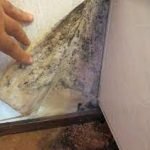
NO!
Damp Issues and Quality Control in Cavity Wall Insulation
According to the Cavity Insulation Guarantee Agency (CIGA), damp problems occur in around 3 out of every 1,000 homes with cavity wall insulation (CWI).
Most of these cases arise when insulation is installed in walls that were unsuitable.
In the past, Rockwool was the most commonly used insulation material, but it has largely been replaced by polystyrene beads, which perform better.
Early versions of polystyrene beads—small, soft, white beads similar to those used in bean bags—were poor at repelling water and sometimes contributed to damp problems.
Modern cavity wall insulation, however, uses larger, grey or silver beads of varying sizes, which are designed to resist moisture and significantly reduce the risk of dampness.
One of the main causes of damp issues has been poor installation practices. In earlier years, some salespeople promoted “free” cavity wall insulation without carrying out proper property surveys.
This led to unsuitable homes being insulated, increasing the likelihood of problems.
Improvements in Quality Control
To address these issues, the British Board of Agrément (BBA) introduced the Cavity Assessment Surveillance Scheme (CASS) in April 2017.
This scheme set clear standards for surveying and installation, ensuring insulation was only fitted in appropriate homes. In October 2018, responsibility for CASS passed to CIGA, and it is now managed by the Insulation Assurance Authority (IAA).
Under the CASS process, every property undergoes a detailed survey lasting about two hours.
This assessment checks:
• Wall condition
• Cavity depth and condition
• Damp-proof course
• Gutters and downpipes (leaks are a common cause of damp)
• Condition of external wall (cracks etc.)
Survey data, including cavity photographs, is uploaded to the IAA’s platform for review. Every survey is subject to a desktop audit, and 1 in 10 properties receives an additional on-site audit by an IAA surveyor.
This strengthened process is expected to greatly reduce the number of unsuitable homes being insulated, thereby cutting the risk of dampness linked to CWI.
Before 2017, CIGA reported damp issues in about 3 in every 1,000 homes. With the introduction of the CASS system, that figure is expected to fall significantly.
Telephone: 0800 8 10 10 60 or 07960 799681 and speak to an expert ECO adviser to book a free, no-obligation survey.
Why should I consider insulating the walls of my home?
Benefits of Cavity Wall Insulation
Cavity wall insulation provides a range of advantages for homeowners, including:
Improved Energy Efficiency – Reduces heat loss (by 70%), helping your home stay warmer for longer while using less heating.
Lower Energy Bills – With reduced heating demand, you can enjoy significant long-term cost savings. You should reduce your heating costs by at least 25%.
Greater Comfort – Eliminates drafts and cold spots, creating a consistent and comfortable indoor climate all year round.
Environmental Benefits – By cutting energy use, insulation lowers carbon emissions, reducing your home’s environmental footprint.
Condensation Prevention – Warmer internal walls help prevent condensation, lowering the risk of dampness and mould growth. Cavity wall insulation can totally eradicate condensation and the resulting black mould.
Enhanced Property Value – Energy-efficient upgrades are highly attractive to buyers and can increase your home’s market value. Many mortgage lenders are offering special deals for energy-efficient properties.
Noise Reduction – Acts as a sound barrier, reducing external noise, which is particularly beneficial in busy or urban areas.
Quick & Hassle-Free Installation – A typical installation takes around three hours for a semi-detached house, with minimal disruption.
IT’s FREE!
Telephone: 0800 8 10 10 60 or 07960 799681 and speak to an expert ECO adviser to book a free, no-obligation survey.
Will cavity wall insulation improve condensation problems in my home?
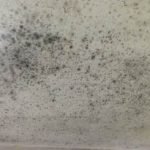
Cavity Wall Insulation and Condensation Control
Yes – free cavity wall insulation can be very effective in reducing condensation problems.
Condensation occurs when warm, moist air comes into contact with a cold surface.
While warm air can hold more moisture, it releases that moisture as water droplets when cooled. If these droplets are not dried quickly, they can encourage the growth of black mould.
By insulating your cavity walls, the internal wall surfaces remain warmer, making it far less likely for condensation to form.
This helps reduce the risk of damp and mould, creating a healthier and more comfortable home environment.
In many cases, cavity wall insulation can significantly minimise – or even eliminate – condensation issues.
Telephone: 0800 8 10 10 60 or 07960 799681 and speak to an expert ECO adviser to book a free, no-obligation survey.
Can cavity wall insulation be installed in every type of house in Cardiff?
Are All Homes Suitable for Cavity Wall Insulation?
Not every home with cavity walls can be insulated.
Before 1920, most houses were built with solid walls—either solid brick (two layers of brick built side by side) or stone.
A few exceptions exist, such as some mill houses in Lancashire and Yorkshire, which were constructed with two stone walls and a cavity in between. However, these properties are generally unsuitable for insulation because of the risks involved.
Solid walls were more vulnerable to damp, which in the past often led to serious health problems, including pneumonia.
To address this, cavity walls were introduced. These consist of two brick walls with a gap (cavity) between them, designed to reduce dampness.
By the 1920s, cavity walls became increasingly common, and by 1930 they had become the standard in UK housebuilding.
In general, homes built after 1930 are more likely to be suitable for cavity wall insulation—but a proper survey is always required to confirm eligibility.
Key Exceptions
Some homes should not have cavity wall insulation installed:
Concrete properties – often former council houses with unfilled cavities. Insulating these can lead to issues such as concrete cancer, making them unsuitable.
Timber-framed properties – these have a wooden frame attached to an outer brick wall, already filled with insulation. Adding further cavity insulation is not necessary and may cause problems.
Homes built after 1982 – building regulations required insulation to be installed during construction. However, some properties built in the 1980s, 1990s, and even early 2000s were left uninsulated.
These may still be suitable, but only after a survey confirms the cavity is empty.
Telephone: 0800 8 10 10 60 or 07960 799681 and speak to an expert ECO adviser to book a free, no-obligation survey.
How can I tell if I qualify for a grant?
Pathways to Qualify for a Cavity Wall Insulation Grant in Cardiff.
There are three main groups under which you may qualify for free cavity wall insulation:
1. The General Group
To be eligible in this group, your home must meet both of the following criteria:
Council Tax Band
• In Wales: Bands A, B, C, D, or E
• In England: Bands A to D
(You can check your council tax band on the Gov.Uk website ✔)
Energy Performance Certificate (EPC) Rating
• Your property must have an EPC rating of D, E, F, or G
(You can verify this on the EPC Register ✔)
These conditions apply to homeowners and private renters (with the landlord’s consent).
Private tenants must also be in receipt of a qualifying benefit, and the property’s EPC rating must be D or E.
F or G rated rented properties require a legal exemption to be registered in order to qualify.
2. The Low-Income Group
To qualify under this pathway, you must:
Receive at least one qualifying benefit, and have an EPC rating of D, E, F, or G.
Qualifying Benefits:
• Pension Credit
• Income-Based Jobseeker’s Allowance
• Universal Credit (no income threshold)
• Income-Related Employment and Support Allowance
• Tax Credits (Working or Child Tax Credits – no income threshold)
• Income Support
• Housing Benefit (newly added)
• Child Benefit / Family Allowance (income thresholds apply, see below)
Child Benefit Qualification Matrix (gross annual household income):
Number of Children 1-Adult Household 2-Adult Household
1 £19,900 £27,500
2 £24,800 £32,300
3 £29,600 £37,200
4 £34,500 £42,000
Telephone: 0800 8 10 10 60 or 07960 799681 and speak to an expert ECO adviser to book a free, no-obligation survey.
How can I apply for a grant to insulate my home?
Telephone: 0800 8 10 10 60 or 07960 799681 and speak to an expert ECO adviser to book a free, no-obligation survey.
